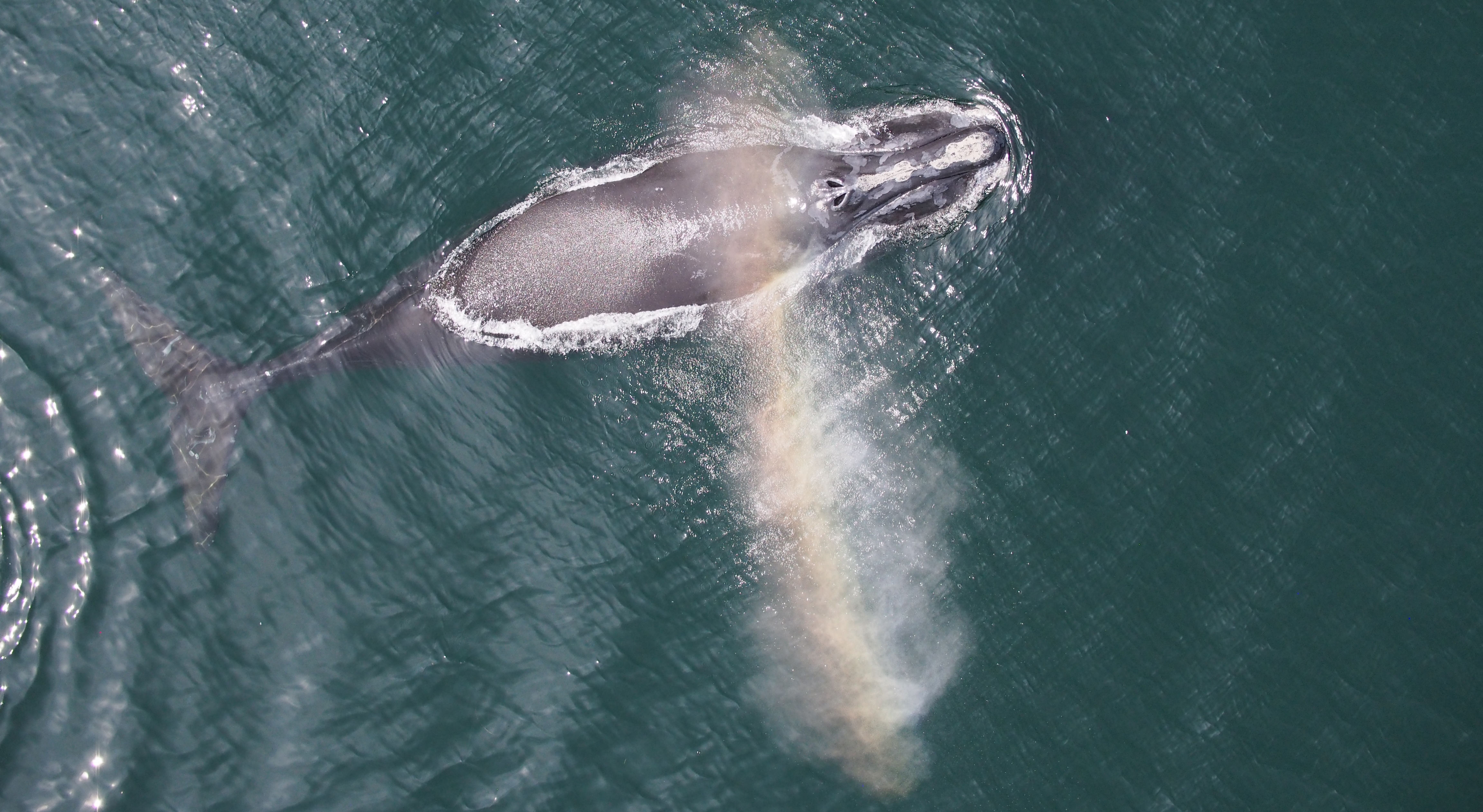
 North Atlantic right whale © Gina Lonati - University of New Brunswick
Research
My work uses a combination of novel and established technologies and quantitative approaches to investigate the behaviour of marine species of conservation concern. The aim of my research is to help inform decisions that collectively impact individual and population fitness in increasingly anthropogenically-influenced ocean environments. I seek to determine and understand where and why marine animals conduct key life history behaviours in the context of anthropogenic and environmental influences. I use multifarious technology including telemetry, genetic analysis, and stable isotopes to answer questions on species behaviour and range, population dynamics, feeding ecology, and habitat use.
Investigating monitoring and management measures for endangered marine mammals
In a changing ocean it is crucial we understand the effectiveness of conservation action and threat mitigation measures. By combining multiple technologies from acoustic gliders, vessel position data (AIS), whale movement patterns, and detection range models I investigate the effectiveness of mitigation to reduce the threat of anthropgenic stressors.
Bioacoustic surveys through passive acoustic monitoring (PAM) and animal-borne biologging acoustic sensors has become preverlent tools to allow constant near-realtime and archival monitoring of our oceans. Data collection with PAM and biologgers can be deliver both eulerian and lagrangian observations that can inform us of marine animal presence, movement, and behaviour.
While many marine mammals of interest vocalise frequently enough when present to enable mitigation and ecological studies it can be context dependent. Thus it is necessary as PAM expands and is relied upon globally as a conservation tool to determine the probability of true detection and missed detection under current monitoring regimes and how to explore how we can improve our surveys.
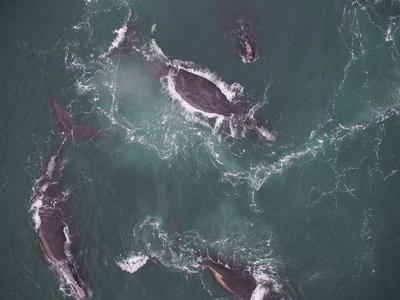
This work currently focuses on the Gulf of St Lawrence, Canada which has become a hotspot for the critically endangered North Atlantic right whale since 2015 with up to 40% of the population (~370 individuals) visiting the region from May through November. Across their range North Atlantic right whales are at risk of vessel strike and entanglement in fishing gear.
Mechanisms constraining individual success in marine megafauna
Disentangling the complex life histories of marine species is challenging, but necessary to understanding how foraging regimes, habitat use, and the changing environment lead to animal fitness and individual success in terms of survival and reproduction. It is necessary for local and global conservation practices as climate change continues to drive environmental changes.
In my work on loggerhead sea turtles, I determined how foraging choices, endogenous reserves, and variations in health indices impact individual reproductive fitness and ultimately offspring fitness. I established a novel, minimally invasive measure to examine changes in endogenous reserves used by a migratory species over a breeding season.
I also deployed GPS and tri-axial accelerometers tags on nesting female trutles to disentangle the complex movement patterns and diving behaviours of individuals with links to energy expenditure, individual health, and habitat use.